
How a Tiny AI Agent Gave Me My Attention Back > From file janitor to digital gardener
The Day I Fired Myself as File Janitor
What if you spent zero percent of your brain on file organization?
Somewhere between “I’ll clean this up on the weekend” and 2,400 files in Downloads, I realised my digital life was quietly draining my attention. So instead of doing another heroic cleanup, I tried something different: I built a small file‑organising agent in Antigravity and pointed it at the mess. This is a short story about what happened, how much hidden cognitive load it exposed, and why I think tiny, boring agents like this might matter more for our quality of life than the flashiest AI demos.
The quiet cost of “I’ll do it later”
Like a lot of people, I’ve been running the same script for years:
“I’ll clean my Desktop this weekend. It’ll take, what, two hours?”
It never does.
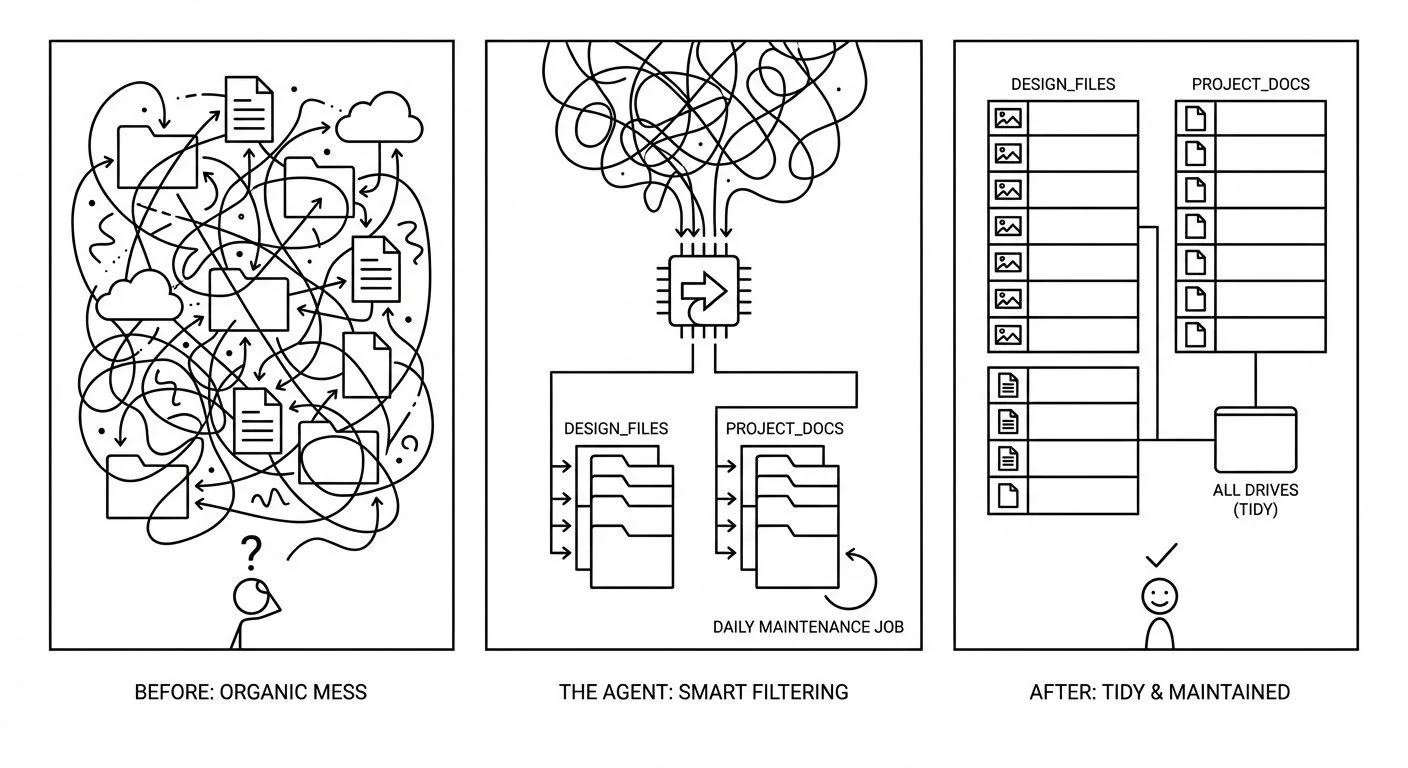
The icons keep piling up. The Downloads folder becomes a kind of digital landfill. Backups, drafts, exports, screenshots, random zips—everything lands in the same few places and then quietly sinks out of sight. You don’t see it most of the time, but you feel it. That tiny spike of anxiety when you ask yourself: Do I still have that file? Where did I put it?
I’d always treated this as an annoying but inevitable part of modern work. Recently, I decided to treat it as a design problem instead.
Letting an agent walk the mess
So I built a small File Organizer Agent in Antigravity and let it take the first pass at reality.
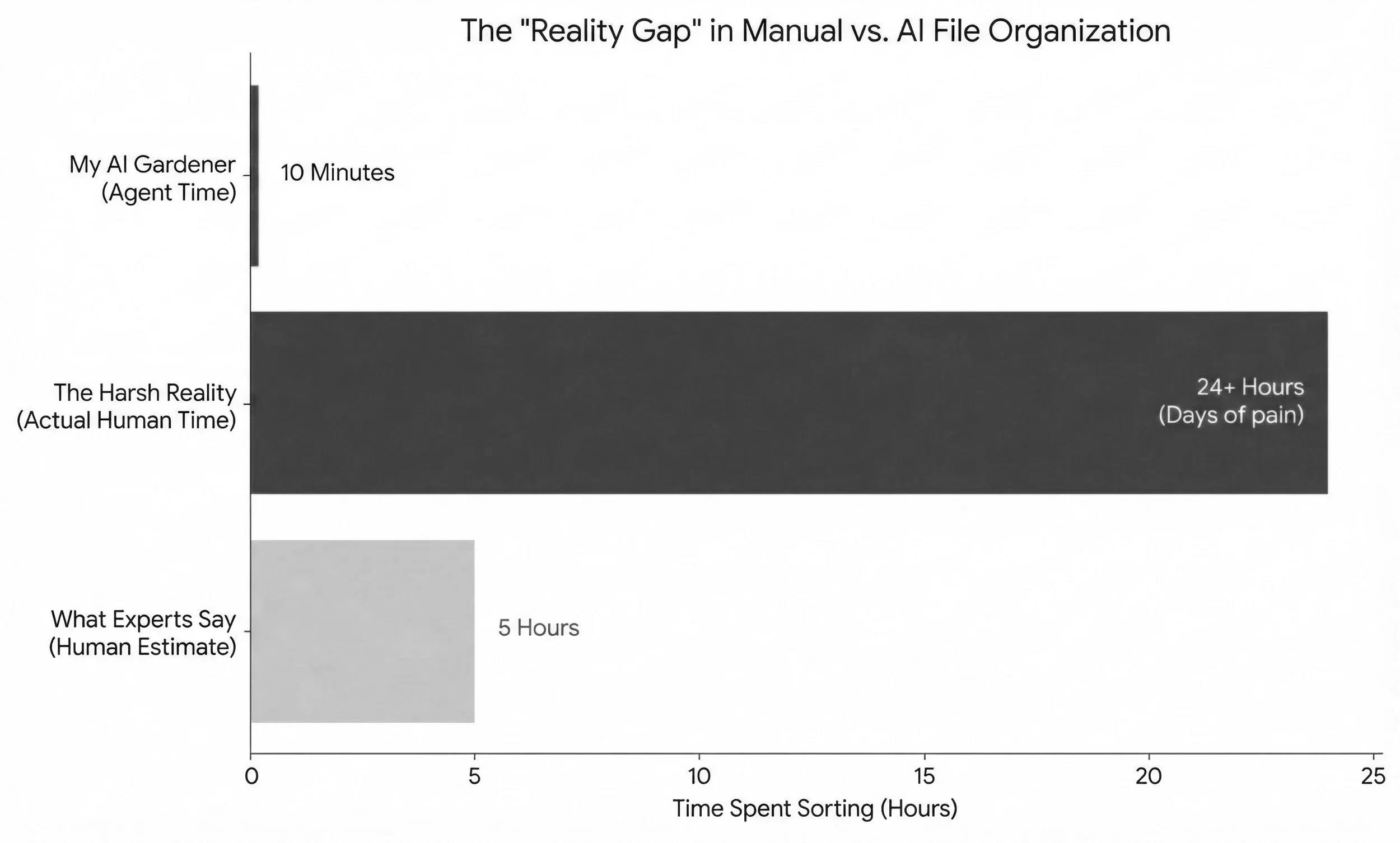
It crawled through my drives and came back with a kind of x‑ray of my habits: more than 2,400 files stuck in Downloads, about 1.6 TB of mixed backups and a few critical files hiding among them. I’d been telling myself the whole thing was a four‑hour job. The agent’s report was closer to the truth: actually checking and sorting everything by hand would be at least two full days of dull work.
The agent’s audit and mapping took minutes.
That contrast landed hard. It wasn’t just about having a messy drive. It was about how confidently I’d been underestimating the cost of cleaning it, and how much quiet mental bandwidth I’d been donating to the problem without noticing.
From janitor to digital gardener
I didn’t want the agent to be a digital janitor that constantly tidies up after me. I wanted it to be more like a gardener: something that shapes where things grow, according to a simple set of rules.
So I gave it a few:
games stay where they are
design assets flow into a master library
obvious junk gets pruned
Nothing fancy. No 200‑line taxonomy. Just enough structure that new things have somewhere sensible to land.
Now the agent runs in a daily loop. It watches where files appear, moves them where they should live, and trims what clearly doesn’t need to be there. My ongoing effort for all of this is basically zero.
The visible result is nice—a cleaner desktop, fewer mystery folders—but the real shift is internal. That low‑level “where is that thing?” anxiety starts to fade. I don’t have to hold a mental map of my filing system in my head anymore. I trust the process more than I trust my memory.
Scaling beyond one brain
It’s one thing to feel this personally. It’s another to imagine it at team scale.
Take a team of ten people. Every week they burn some amount of time on file placement and clean‑up: dragging stuff into folders, hunting for the latest version, trying to remember which drive or workspace something lives in. No one logs that time. It just quietly evaporates.
Now imagine none of them ever has to think about that again.
The latest version is always where it should be. Downloads never become landfills. Shared assets are routed to the right place as soon as they appear. The team still creates and uses files—but the janitor job disappears.
Now stretch that to an organization with 100,000 people. None of them spends time dragging files into folders. All of that work moves from human attention to quiet agents that don’t get tired and don’t get bored.
You can do the math on the hours saved. But the real win is softer: less stress, fewer context switches, more focus for the kind of work that actually requires a human brain. And maybe, at the end of the day, a little more energy left for life outside work.
Why tiny agents matter
We talk a lot about big, abstract AI breakthroughs. The big models, the impressive demos, the slide decks with exponential curves.
I’m increasingly convinced that this other category—the small, boring, practical agents that quietly take away maintenance work—might matter more to our day‑to‑day quality of life. They don’t look dramatic in a keynote, but they change how your day feels.
Firing myself as file janitor was a small experiment. It made me wonder what other invisible jobs I’m still doing out of habit.
If you could hand off one maintenance task to an AI agent today, what would it be?
If this felt like signal, help it travel. brankolukic.com : copyself_xyz
#AI #GenerativeAI #Creativity #HumanCenteredDesign #DesignLeadership #FutureOfWork
